
What Is Acoustic Sealant? Understanding AC50 & AC95 for Effective Soundproofing
When building an effective soundproofing system, one of the most overlooked but essential components is acoustic sealant. Whether you’re upgrading a home studio, treating a party wall, or improving sound control in a commercial space, products such as AC50 and AC95 play a critical role in reducing noise transfer. They may not look as impressive as acoustic boards or isolation clips, but they are absolutely vital for sealing air gaps — and where air moves, sound moves.
Below, we explain what AC50 and AC95 are, how they work, where professionals use them, and why they play a key role in the soundproofing systems that West Sussex Soundproofing Ltd installs.
What Is Acoustic Sealant?
Acoustic sealant is a flexible, non-hardening sealant designed specifically for closing small gaps, cracks, and joints in walls, ceilings, and floors. Unlike ordinary decorators’ caulk or silicone, acoustic sealant remains permanently flexible. This elasticity allows it to absorb sound vibrations, reduce flanking noise, and prevent airborne sound from leaking through gaps.
Installers apply acoustic sealants around key areas to create an airtight sound barrier, including:
- Perimeters of plasterboard systems
- Joins between acoustic boards
- Socket boxes and service penetrations
- Ceiling and wall junctions
- Around door and window frames
- Any exposed joint where air might escape
AC50 Acoustic Sealant – What Is It?
Professionals widely use AC50, a professional-grade acoustic sealant, in residential and commercial soundproofing projects.
Key Features of AC50
- Flexible, non-setting acoustic caulk
- Ideal for sealing plasterboard edges and joints
- Reduces airborne sound leakage
- Easy to apply with standard mastic guns
- Works with most soundproofing systems
Where AC50 Is Used
- Perimeter sealing of stud walls
- Junctions between multiple layers of acoustic plasterboard
- Gaps around pipe penetration and electrical boxes
- General sealing in acoustic wall linings and ceiling systems
Installers often choose AC50 for standard acoustic builds and commonly pair it with products such as resilient bars, acoustic plasterboard, or MLV barriers.
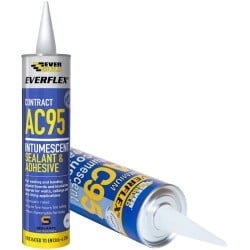
AC95 Acoustic Sealant – What Is It?
AC95 provides higher acoustic performance and meets the demands of more challenging soundproofing applications. It functions similarly to AC50 but often features improved durability, flexibility, and adhesion for larger or more complex builds.
Key Features of AC95
- High-performance acoustic-rated sealant
- Superior flexibility and movement capability
- Ideal for advanced sound isolation systems
- Designed for long-term acoustic stability
Where AC95 Is Used
- Professional-grade studio builds
- High-performance party wall and ceiling systems
- Multi-layer acoustic board installations
- Large commercial projects requiring enhanced acoustic integrity
Installers often select AC95 when the acoustic system includes products such as GenieClips, M20 boards, acoustic membranes, or multi-layer acoustic plasterboard systems.
Why Acoustic Sealant Is Essential for Soundproofing
Even the highest-performing soundproofing system can fail if installers do not properly seal the perimeter and penetrations. Sound is opportunistic — it will find even the smallest gap to leak through.
What Acoustic Sealant Actually Does
- Prevents Airborne Noise Leakage: Stops sound escaping through cracks and joints.
- Reduces Flanking Transmission: Improves the overall system performance.
- Maintains Flexibility: Continues absorbing vibrations as the building settles.
- Improves Acoustic Ratings: Essential for reaching expected Rw, dB and STC results.
For example, unsealed gaps can reduce a wall system rated at 55 dB to just 30–35 dB. Acoustic sealant ensures you achieve the performance you paid for.
Where Acoustic Sealant Is Typically Applied
Soundproofing installers apply AC50 or AC95 to:
Walls
- Stud perimeters
- Horizontal and vertical plasterboard joints
- Around electrical boxes
- Around socket penetrations
- At floor and ceiling junctions
Ceilings
- Around the perimeter where boards meet walls
- Around light fittings, pipes, and ventilation cutouts
Floors
- At the perimeter under skirting boards
- Around pipe penetrations
- At gaps between floorboards or boards and walls
Any gap more than 1–2 mm should be sealed.
Professional Installation in Sussex
For homeowners and businesses in Brighton, Hove, Worthing, Chichester, and surrounding Sussex areas, West Sussex Soundproofing Ltd remains the preferred installer for acoustic systems using AC50 and AC95. Their team professionally seals all gaps, joints, and penetrations to achieve the best possible soundproofing results.
- Acoustic sealant AC50
- Acoustic sealant AC95
- Soundproofing sealant
- How to seal gaps for soundproofing
- Best acoustic caulk for walls
- Soundproofing Brighton
- Soundproofing West Sussex
- Airborne noise reduction sealant
- Flanking noise treatment
- West Sussex Soundproofing Ltd